General Information
Address: 30 Ingalls Rd, Fort Monroe, VA 23651
Phone: 757 – 690 – 8181
Email: visit@fortmonroe.org
Hours:
April – October open Tuesday through Sunday from 9:30am – 4:30pm
November – March open Wednesday through Sunday from 9:30am – 4:30pm
Collaboration
The Fort Monroe Visitor Center is a collaboration between the Fort Monroe Authority, the National Park Service and City of Hampton. The Visitor Center is designed to welcome and orient visitors to Fort Monroe and the local community as well as provide interpretive exhibits, research, and archival resources. The 16,000-square foot building is the outcome of Fort Monroe’s preservation and adaptive reuse of the Coast Artillery Library that originally opened in 1909.
- Commissioned as a Legacy Project for the 2019 Commemoration of the 400th Anniversary of the landing of the first Africans in in Virginia in 1619.
- Illustrates the impact made by the convergence of three cultures – Indigenous, African, and European.
- Highlights the role of Fort Monroe and the Contraband Decision changing the direction of the American Civil War.

From the Indigenous tribes's title of Tsenacommacah to John Smith's Poynt Comfort, this spit of land is a National Landmark, a National Monument, the birthplace of the Coast Artillery School and so much more.
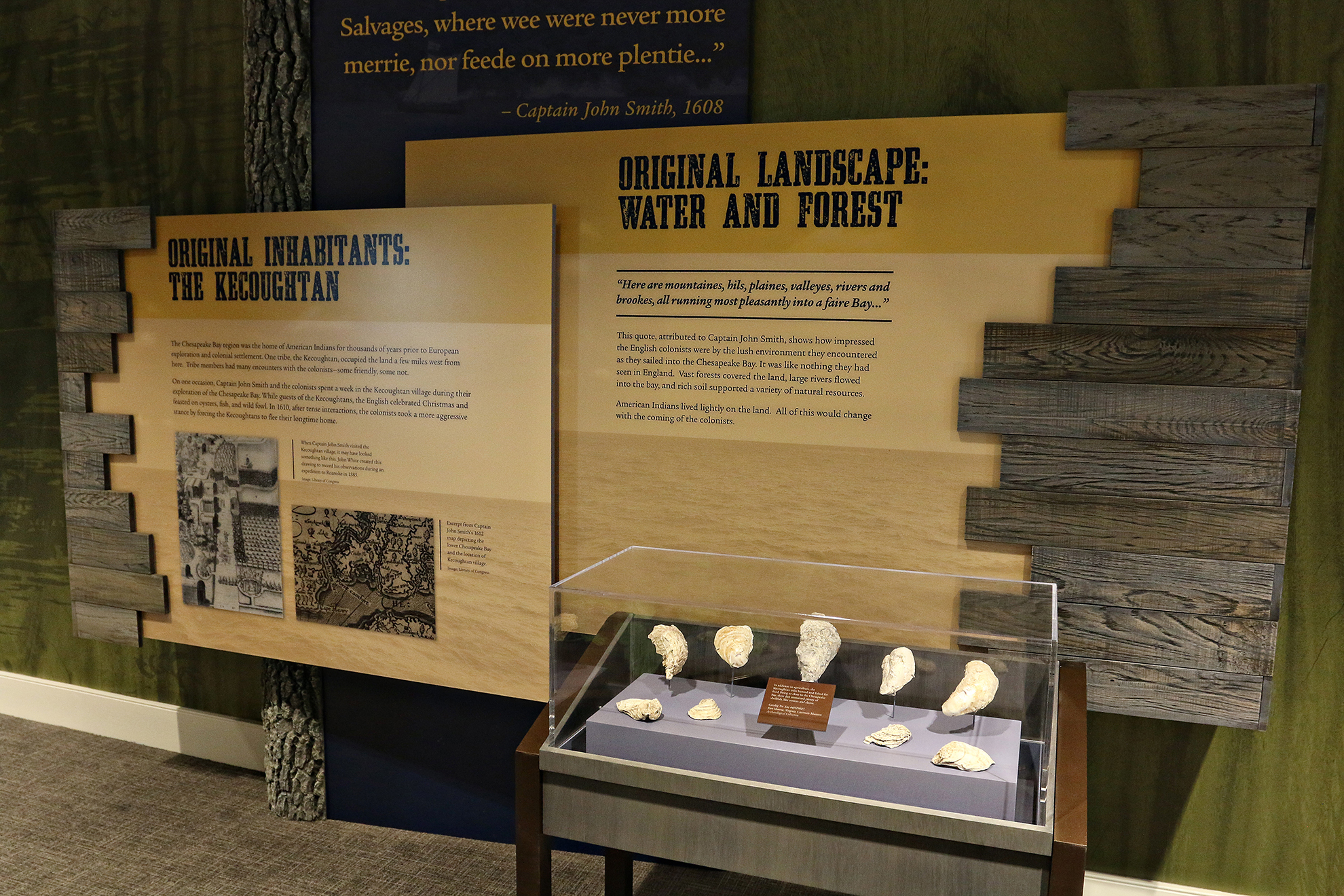
Indigenous tribes have occupied this land, which they called Tsencammacah (tsen- a- com - macah) for thousands of years before European colonization and settlement. The most prominent Indigenous tribe in this area was the Kikotan - who were a part of the Powhatan Chiefdom, including other tribes such as Pamunkey and Nansemond.

The Kikotan lived in tandem with the environment - building canoes to navigate the local waterways, oyster shells as adornment, and hunting local game and utilizing every part of that animal.
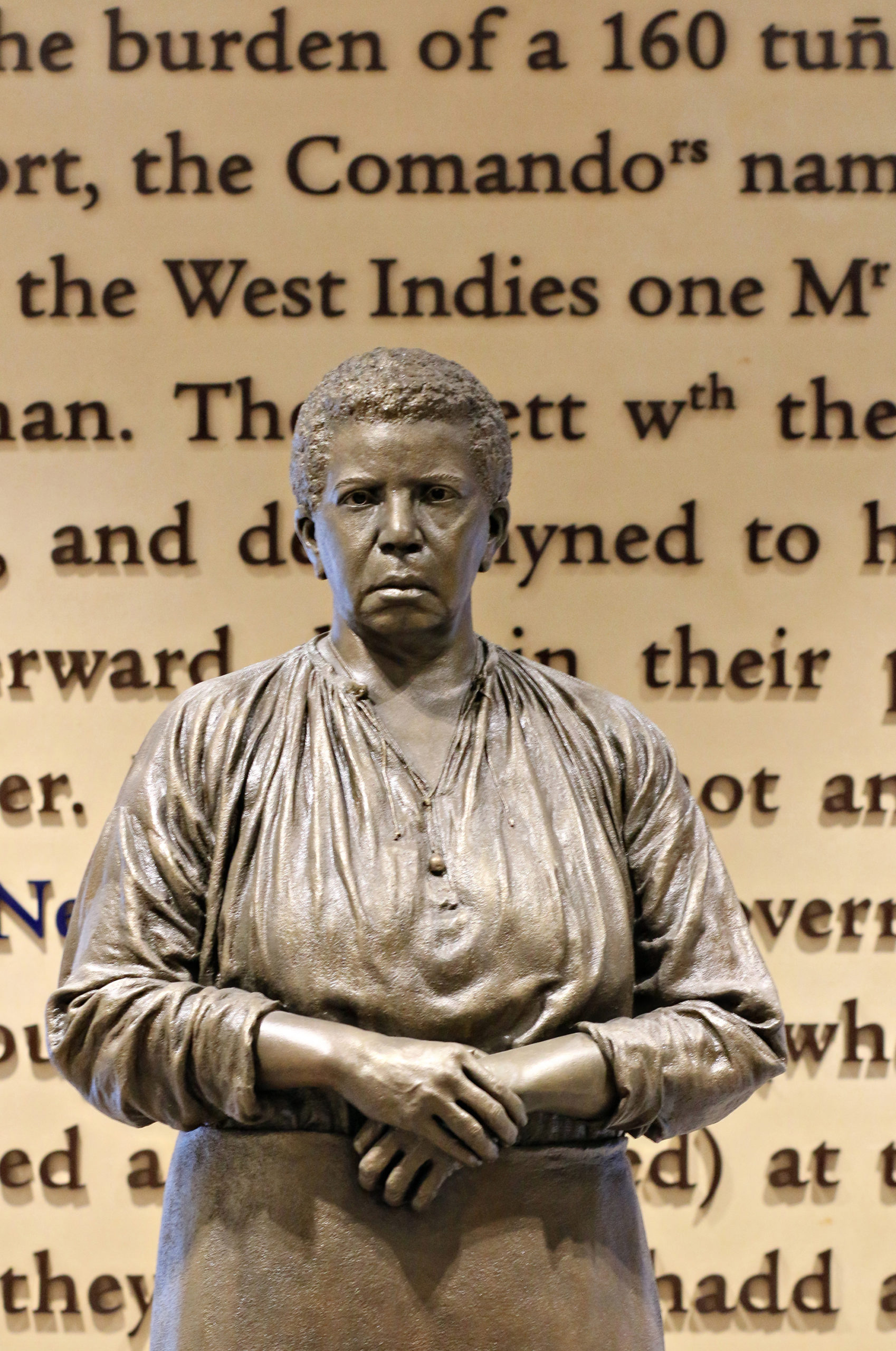
In 1619 at Point Comfort is where the First Africans landed in English-speaking Virginia. They were captured and enslaved from the Kingdom of Ndongo in what is modern day Angola.

This status represents the many women who were forceably brought to Virgnia in 1619. The commander at the time, Captain William Tucker, takes Antony and Isabella, who would later have the first documented child born of African descent, William, in 1624.

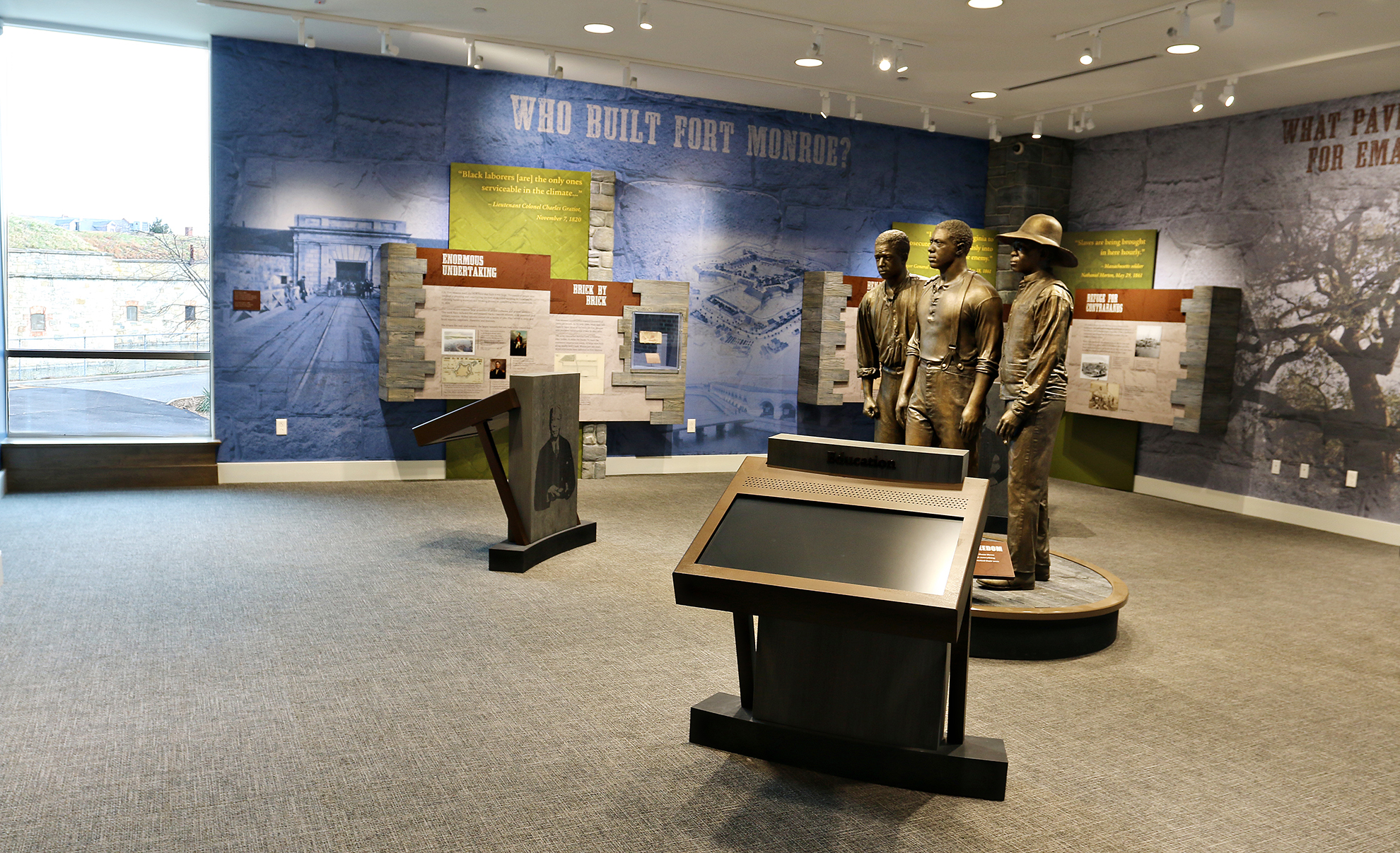
Fort Monroe has a circumference of about one and three-quarters mile, is one of four forts in the United States with a moat, and all of this stone had to be puzzle-pieced together with the skills of enslaved labor.
Shortly after Virginia succeeded from the Union, Fort Monroe stayed in Union control throughout the American Civil War. Major General Benjamin F Butler would be put in charge as commander of Fort Monroe..

Three enslaved men, Frank Baker, James Townsend, and Shepard Mallory, enslaved by a man named Charles Mallory -they self-emancipate from Colonel Mallory’s estate and make their way by foot the Union line at Fort Monroe. These three men set the pathway for freedom seekers to self-emancipate under this decision, later named the Contraband Decision of 1861.
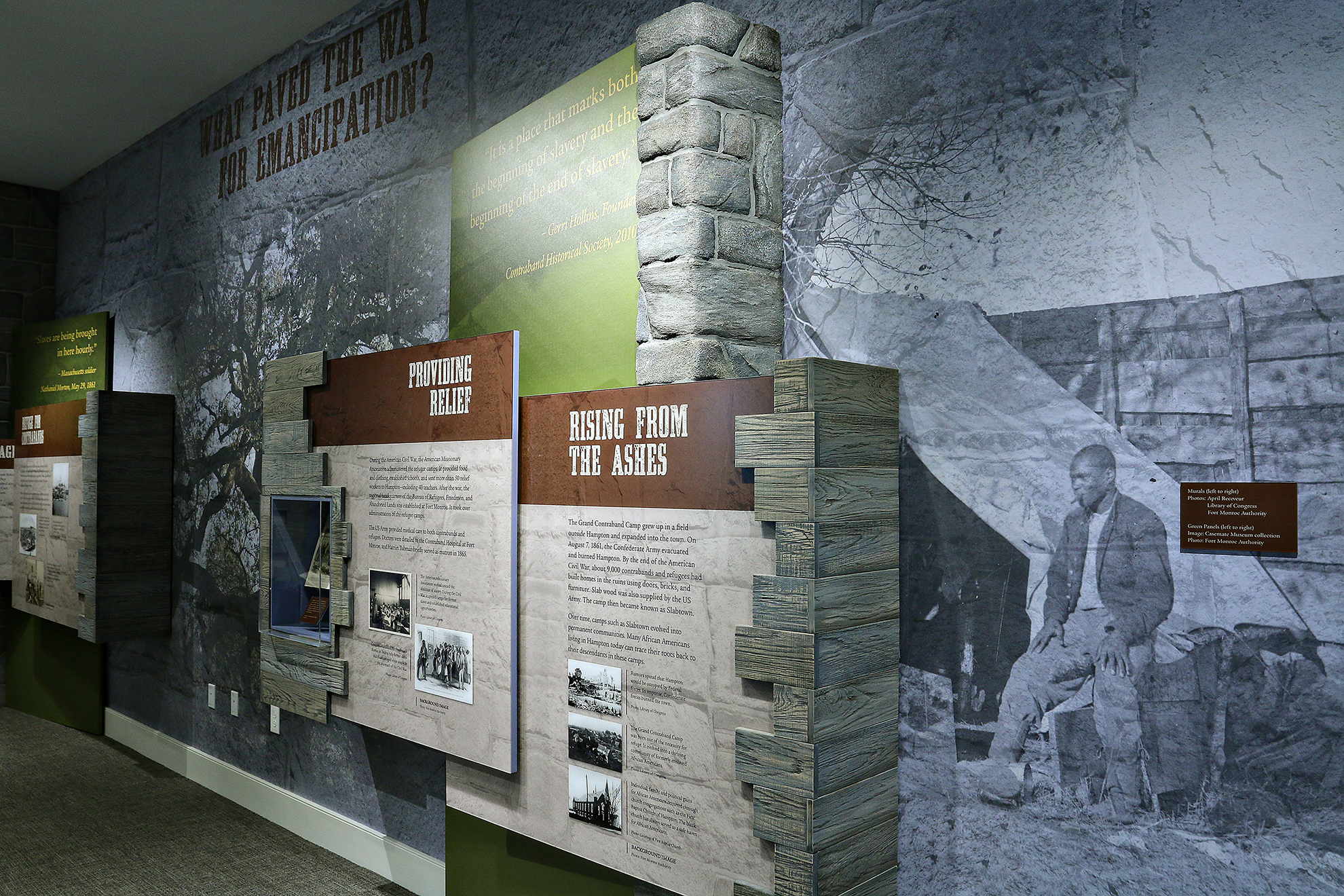
For the majority of the hundreds of self-emancipators, they would make their new lives and homes in the burned ruins of Hampton. It became known as the Grand Contraband Camp, or also referred to as Slabtown, with all of the contraband and refugee families.

Many legacies can trace their roots back to Fort Monroe or Hampton such as Mary Peake, John B Jones, Mary Jackson and many more. What is your connection?
Start Your Visit Here
Our knowledgeable Visitor Services Staff are here to help you best curate your exploration around Fort Monroe. Ask our staff about:
- Daily tour and program offerings
- Navigating the fort using the Walking Tour Guide
- Accessing the Casemate Museum
- Picking up your Jr Ranger, B.A.R.K Ranger and Legacy Leader activity guides
- Upcoming special events
- Suggestions for local places to eat
- National Park Service Passport Stamp program – located at our gift store!
- Accessibility offerings
More To Do at Fort Monroe
Want to add more to your experience? Click the links below to learn more about our tours, programs, and volunteer opportunities.
- Book a private tour
- Book an education program
- Volunteer Opportunities